glitch
.projects
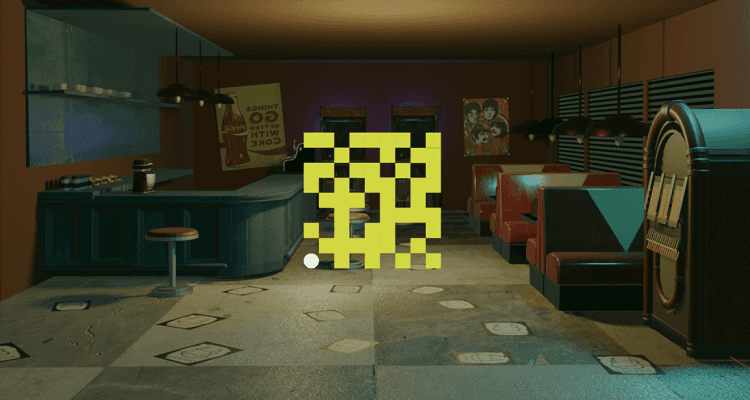
Create an immersive game environment that embodies Marc Augé’s concept of non‑places—spaces that are recognizable yet lack personal attachment. The brief called for designing an interactive installation in the form of a diner where players would question their sense of place, with constraints around narrative coherence, spatial realism, and a cohesive visual identity.
Glitch began as an exploration into Marc Augé’s concept of non‑places—spaces like transit hubs and waiting rooms that are universally familiar yet devoid of personal attachment. To ground the concept, I chose the archetype of a mid‑20th‑century American diner and placed it in a contemporary Turkish context. This juxtaposition of cultures and eras provided the perfect canvas to investigate how spatial design and brand identity could shift perceptions of place.
The project kicked off with contextual research into diner iconography and the socio‑psychological underpinnings of Augé’s theory. I visited local diners and similar “third places,” documenting lighting, furnishings, and auditory cues. I also conducted informal interviews with patrons and staff to understand what made these spaces feel comforting or, conversely, impersonal. Insights from these sessions were mapped into themes around nostalgia, anonymity, and subtle disruptions—revealing an opportunity to play with familiarity and disorientation.
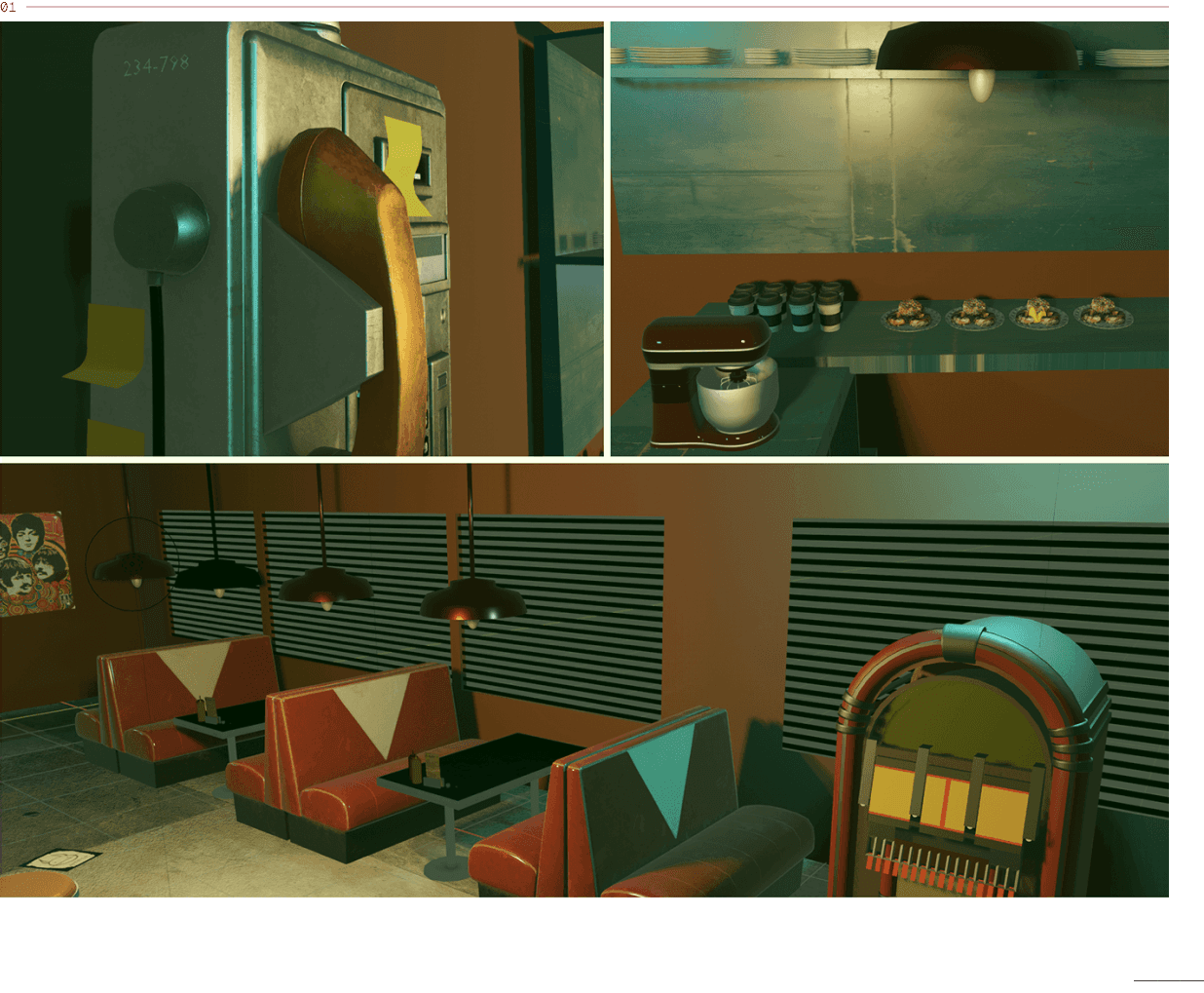
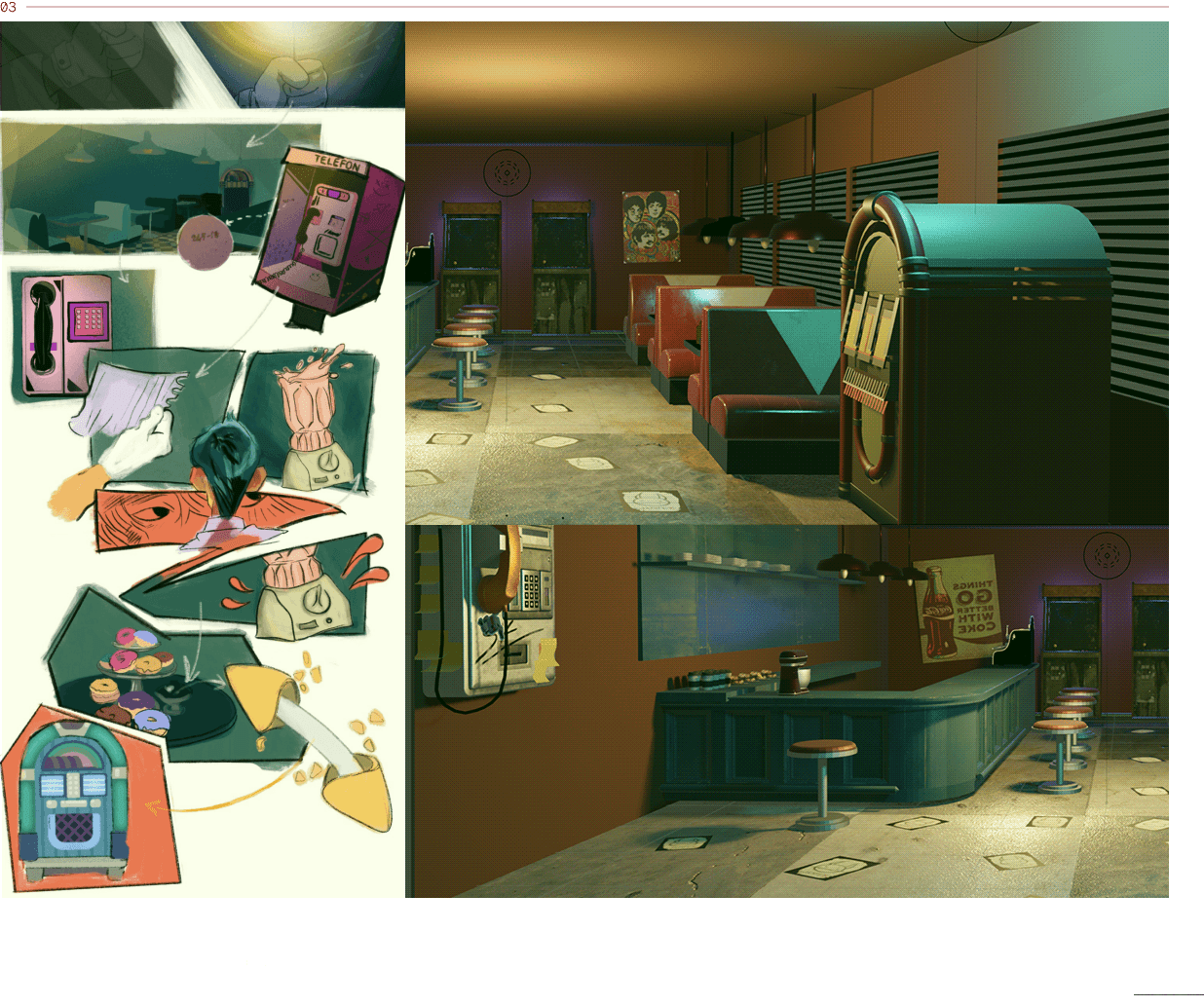
With these insights, I developed personas and a player journey that framed the diner as both stage and actor. Sketches, floor plans, and storyboards charted how visitors might notice odd details (a telephone out of time, an extra jukebox), collect clues, and ultimately confront a “glitch” that transforms the setting. A service blueprint outlined interactions between players, the environment, and hidden mechanics, ensuring that every touchpoint—from lighting shifts to sound cues—contributed to the narrative arc.
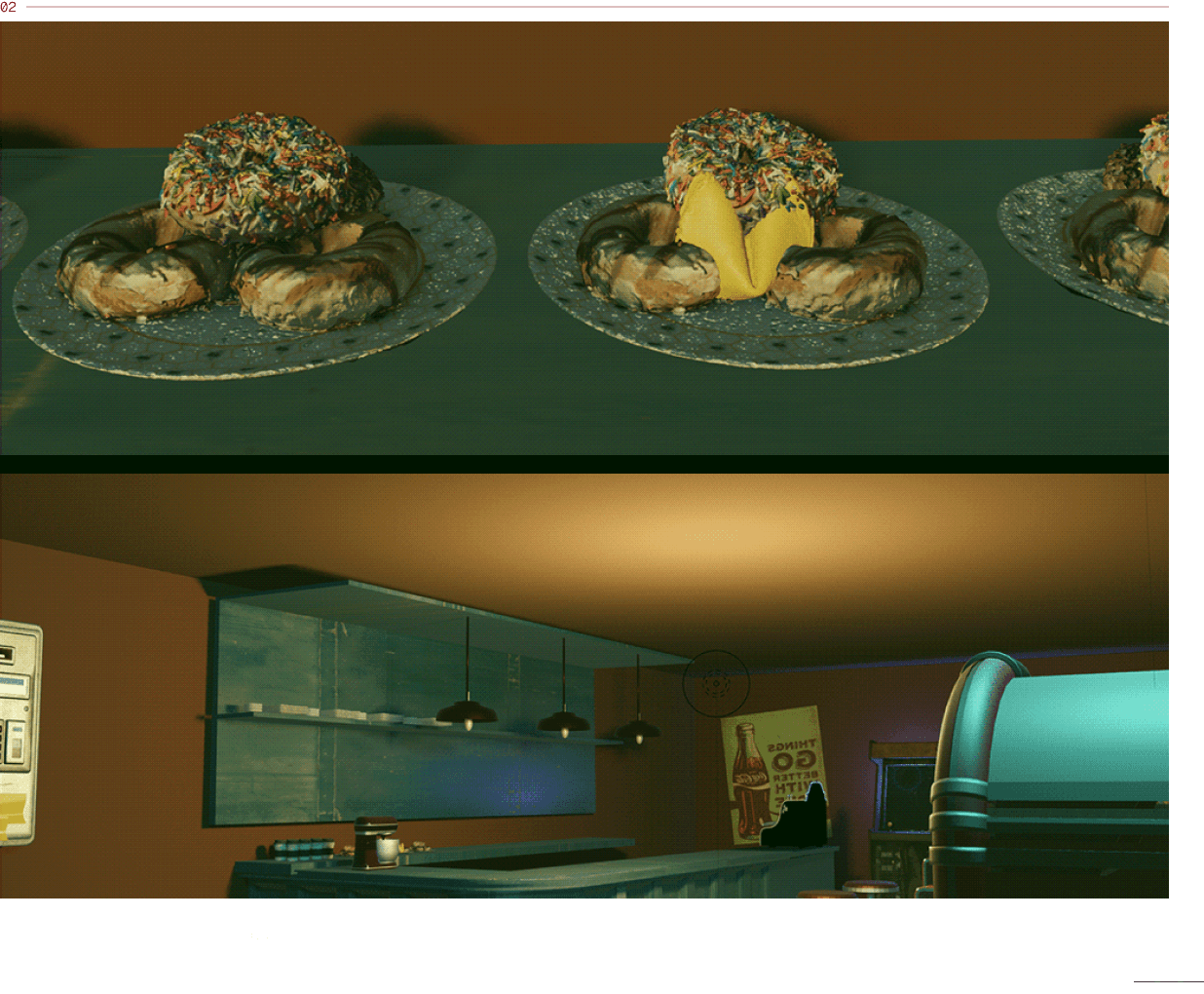
The design phase blended visual identity and spatial design. I crafted a glitch‑inspired logo and a bold color palette to tie the digital motif to the physical space. 3D modeling and texturing refined the diner’s look and feel, while interactive elements like arcade machines and a responsive jukebox turned players into co‑authors of the experience. Finally, I tested the installation with users and incorporated feedback into a cohesive system of physical and digital artifacts—including signage, take‑home keychains, and social‑media assets—that extended the story beyond the diner.
By merging research‑driven insights with tactile craftsmanship, Glitch demonstrates how thoughtful design can transform an anonymous “non‑place” into a memorable collective space, inviting participants to step in, explore, and leave their own traces behind.
01
02
03
see also